
Section :
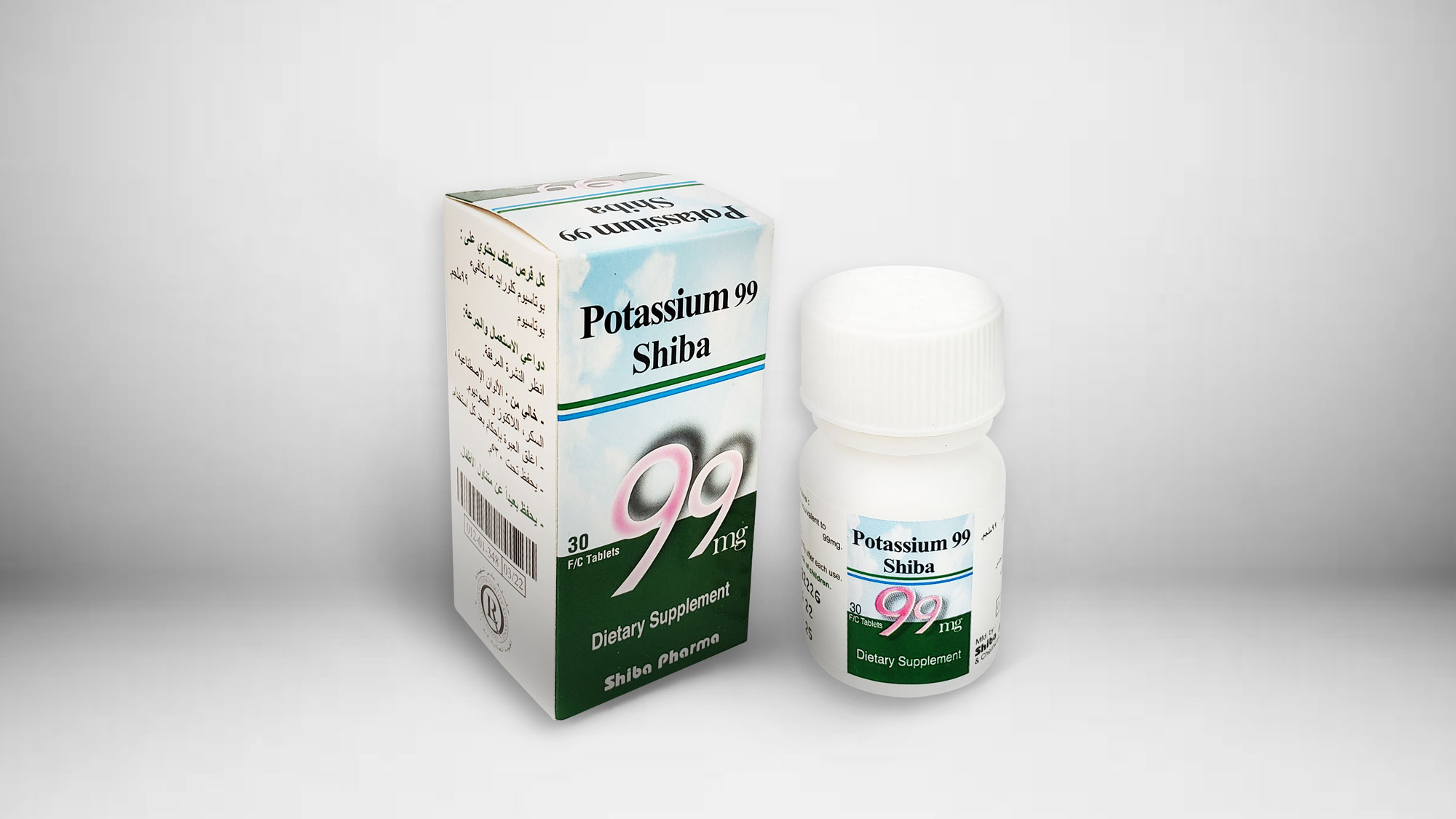
Potassium 99 Shiba
📌 COMPOSITION
Each F/C tablet contains: Potassium chloride equivalent to Potassium 99 mg.
📌 DESCRIPTION
Potassium 99 Shiba (Potassium) is a dietary supplement used to treat or prevent low levels of potassium in the blood. Potassium is a very important mineral for the body, as it is responsible for many important functions in the body, especially heartbeat, and maintains the balance of electrolytes between the outside and inside of the cell. It also plays an important role in neurotransmitter function and muscle contractions. Also, taking potassium plays a role in reducing the effect of ageing on the bone and helps the muscles and nerves to function properly.
📌 INDICATIONS
All cases of low blood level of potassium (hypokalaemia) which are a result of:
- Treatment with non‑potassium‑sparing diuretics (e.g., furosemide or hydrochlorothiazide).
- Using some medicines for the heart (such as digoxin).
- Corticosteroid or carbenoxolone sodium treatment.
- Advanced liver disease.
- Chronic kidney disease.
- Cushing's syndrome (this condition can cause muscle weakness, obesity and brittle bones).
- Diabetic ketosis (poorly controlled diabetes, patients may feel unwell, have severe stomach pains or fruity‑smelling breath).
- Renal tubular or metabolic acidosis (too much acid in the body).
- A diet low in salt or potassium.
- Potassium loss resulting from severe diarrhoea, vomiting or fistulas.
- Elderly patients with deficient diets.
📌 DOSAGE & ADMINISTRATION
One tablet per day with or immediately after a meal, with a glass of water or as physician directions.
📌 RESTRICTIONS ON USE
Contraindications
- Hypersensitivity to potassium.
- High levels of potassium in the blood (hyperkalaemia).
Precautions
The physician should be consulted before use in the following cases:
- Kidney disease.
- Cirrhosis or other liver diseases.
- Adrenal gland disorder.
- Large tissue injury such as a severe burn.
- Severe dehydration.
- Diabetes.
- Heart diseases or high blood pressure.
- Bleeding or blockage in the stomach or in the intestine.
- Chronic diarrhoea (such as ulcerative colitis or Crohn's disease).
Use in pregnancy and lactation
The physician should be consulted before use by pregnant and lactating women.
📌 DRUG INTERACTIONS
The physician should be consulted if the patient takes the following drugs:
- NSAIDs for pain relief or rheumatism such as aspirin or naproxen, heparin or digoxin, anticholinergics for abdominal or stomach spasms or cramps such as atropine sulphate or hyoscine butylbromide.
- Eplerenone, ACE inhibitors (such as enalapril or lisinopril), angiotensin receptor blockers (such as losartan or valsartan), potassium‑sparing diuretics (such as spironolactone or triamterene), contraceptive pills that contain drospirenone because they may increase potassium levels in the blood.
📌 ADVERSE EFFECTS
Some adverse effects may appear like upset stomach, nausea, vomiting, flatulence or diarrhoea, but can be disposed of by using the drug with a meal.
📌 STORAGE INSTRUCTIONS
Store below 30°C in a dry place.
📌 PHARMACEUTICAL FORMS
- Potassium 99 Shiba tablets: pack of 30 tablets and hospital packs of different sizes.
012-06-199 03/21