Section :
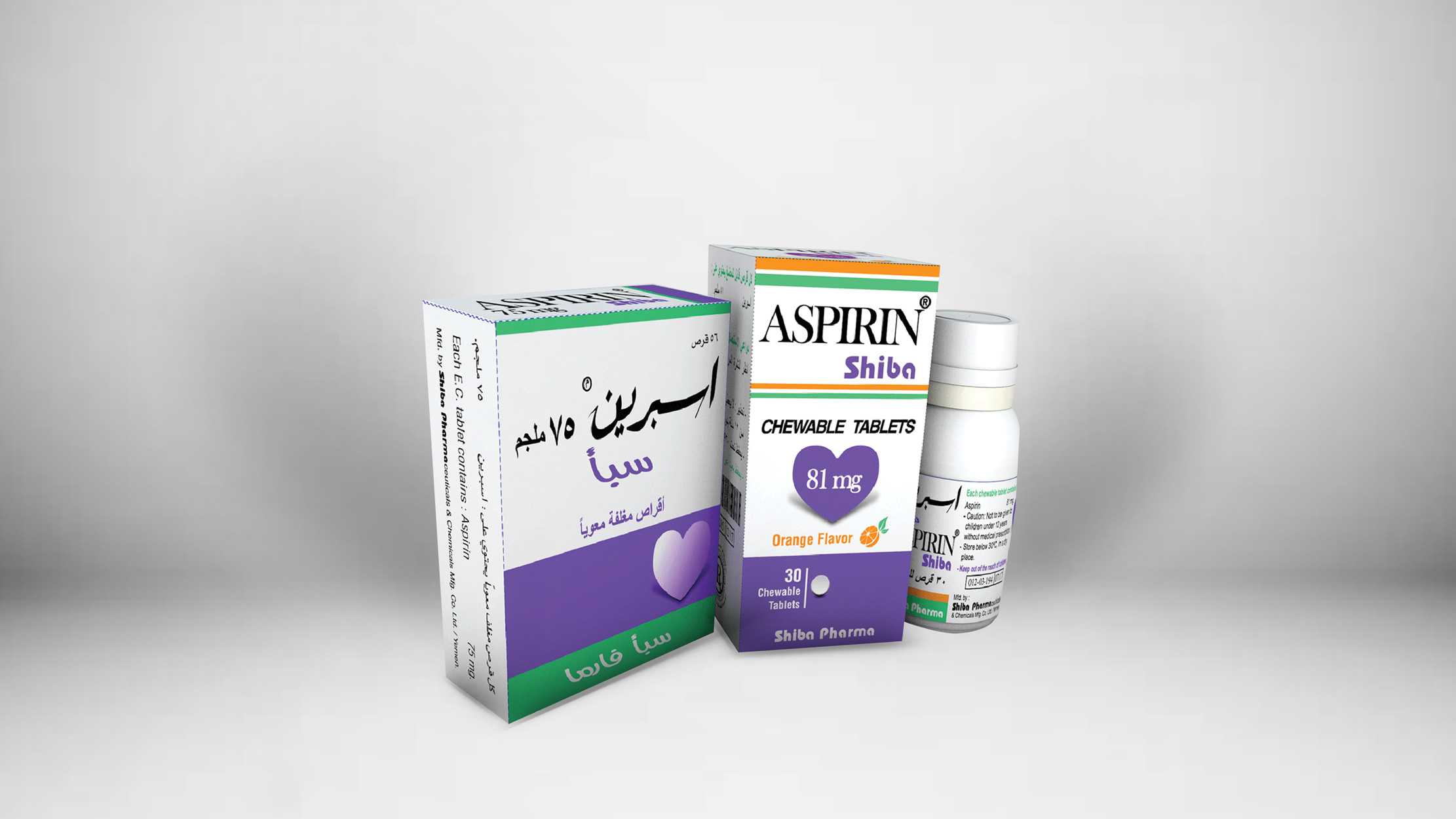
ASPIRIN Shiba
📌 COMPOSITION
- Each enteric-coated tablet contains: Aspirin (Acetylsalicylic acid) 75 mg.
- Each chewable tablet contains: Aspirin (Acetylsalicylic acid) 81 mg.
📌 DESCRIPTION
Aspirin Shiba (Acetylsalicylic acid) is an antithrombotic agent and non-steroidal anti-inflammatory drug (NSAID). It acts by inhibiting cyclo-oxygenase, which leads to inhibition of thromboxane A2 synthesis that causes platelet aggregation. The inhibition of cyclo-oxygenase also leads to inhibition of prostaglandin biosynthesis. The absorption of Aspirin Shiba enteric-coated tablets is delayed until the tablet reaches the intestine, where it disintegrates and releases the active material which is immediately and rapidly absorbed, whereas the absorption of Aspirin Shiba chewable tablets is rapid from the stomach and upper GIT. Aspirin is metabolized to salicylic acid and then to other metabolites. Acetylsalicylic acid and salicylic acid are extensively bound to plasma proteins and distribute rapidly throughout most body fluids and tissues. They are excreted by the kidneys, with a half-life of 15-20 minutes for aspirin and 2-3 hours for salicylic acid. Aspirin Shiba enteric-coated tablets are prepared to minimize possible local gastric irritation (stomach pain), while Aspirin Shiba chewable tablets are considered useful for relieving acute pain.
📌 INDICATIONS
- Prophylaxis for patients who are more susceptible to cardiovascular disorders and ischemic stroke risk, such as:
- Patients with a history of myocardial infarction.
- Patients with stable or unstable angina.
- Patients with deep vein thrombosis.
- Prophylaxis against recurrent transient ischemic attack or stroke in patients who had transient ischemia of the brain due to fibrin platelet emboli.
- Mild to moderate pain (such as headache, toothache and muscle pain), fever, and other inflammatory conditions: rheumatic fever, rheumatoid arthritis, and osteoarthritis.
📌 DOSAGE & ADMINISTRATION
- Aspirin Shiba enteric-coated tablets: The tablet should be swallowed whole with a glass of water, without chewing or crushing.
- Aspirin Shiba chewable tablets: The tablet should be chewed in the mouth, followed by drinking a glass of water. It can be taken after food.
- Prophylaxis for cardiovascular disorders and stroke: 1-2 tablets once daily, up to 4 tablets or as directed by a physician.
- For pain, fever and inflammation: 4-8 tablets every 4-6 hours. The maximum dose is 4 g in divided doses.
📌 RESTRICTIONS ON USE
Contraindications
- Hypersensitivity to salicylates or other NSAIDs.
- Haemophilia (bleeding tendency) or other bleeding disorders.
- History of gastrointestinal ulceration, bleeding or perforation related to previous NSAID therapy.
- Patients with gout, severe heart, hepatic or renal impairment.
- Aspirin should not be given to children under 16 years of age who are suffering from or recovering from a viral infection or fever, to avoid the risk of Reye's syndrome, unless prescribed by a physician.
- Aspirin Shiba chewable tablets should not be given for at least 7 days after tonsillectomy or oral surgery, unless prescribed by a physician.
Precautions
- Aspirin should not be used for a long time unless prescribed by a physician.
- Aspirin may cause gastrointestinal ulceration, bleeding or perforation at any time during treatment, with or without warning symptoms. Therefore, caution should be taken, especially in the elderly and in patients with a history of GIT disease.
- Caution should be taken in patients suffering from asthma, dehydration, G6PD deficiency, hypertension, or diabetes.
- Caution is recommended in patients with impaired liver or kidney function tests or those with heart problems.
- Aspirin may impair fertility in women by an effect on ovulation; this effect is reversible upon stopping treatment.
- Aspirin treatment should be stopped several days before any surgical operation.
Use in Pregnancy and Lactation
- Aspirin administration in the third trimester of pregnancy may increase the risk of bleeding, delay the onset of labour, and increase its duration. Therefore, it is better to avoid analgesic (high) doses, especially in the last few weeks. Although low doses are not considered harmful, it is preferable not to use them unless under the supervision of a physician.
- Aspirin should not be used during lactation to avoid the risk of Reye's syndrome in the infant.
📌 DRUG INTERACTIONS
- Concomitant administration of Aspirin with corticosteroids or other NSAIDs may increase the risk of gastrointestinal ulceration or bleeding.
- Concomitant administration of Aspirin with anticoagulants (e.g., coumarin, warfarin), antiplatelet agents (clopidogrel), or SSRI antidepressants may increase the risk of bleeding.
- Concomitant administration of Aspirin with diuretics (e.g., spironolactone), probenecid, or sulfinpyrazone may decrease the effect of these drugs. It may also decrease the hypotensive effect of ACE inhibitors and angiotensin II receptor antagonists and may increase the risk of renal impairment.
- Taking Aspirin with insulin and antidiabetics, methotrexate, acetazolamide, phenytoin, or valproate may increase their actions and side effects.
- Aspirin may increase the plasma concentration of zafirlukast when taken concomitantly.
- The dose of Aspirin should not exceed 81 mg per day when used concomitantly with cilostazol.
- Aspirin may alter the efficacy of mifepristone, so they should not be taken together.
- Antacids and kaolin may reduce the effect of Aspirin, whereas the effect of Aspirin may be enhanced by metoclopramide.
📌 SIDE EFFECTS
- Patients with a sensitive gastric mucosa may experience gastric disturbances.
- Other infrequent side effects include hypersensitivity reactions, vertigo, and hearing disturbances.
- Rarely, thrombocytopenia has been reported.
📌 OVERDOSAGE
Symptoms: Dizziness, tinnitus, sweating, nausea, vomiting, and confusion. In severe cases, it may lead to CNS depression with coma, as well as cardiovascular and respiratory depression.
Treatment: Administration of activated charcoal or gastric lavage, and administration of sodium bicarbonate. In severe cases, haemodialysis may be necessary.
📌 STORAGE INSTRUCTIONS
- Aspirin Shiba enteric-coated tablets: Store below 25°C in a dry place, protect from light.
- Aspirin Shiba chewable tablets: Store below 30°C in a dry place, protect from light.
📌 PHARMACEUTICAL FORMS
- Aspirin Shiba enteric-coated tablets: Pack of 56 tablets and hospital packs of different sizes.
- Aspirin Shiba chewable tablets: Pack of 30 tablets and hospital packs of different sizes.