
Section :
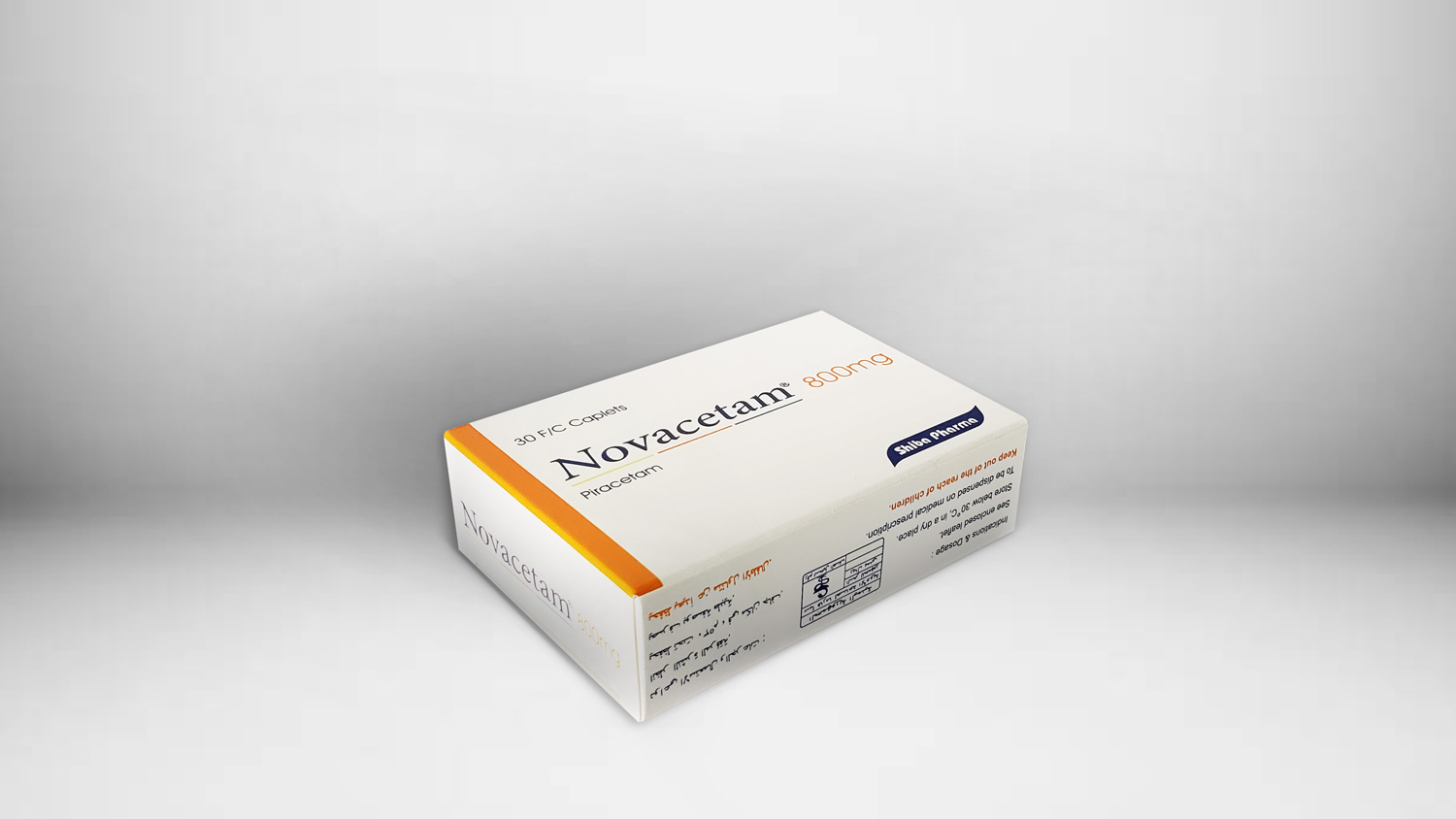
Novacetam Tab
📌 COMPOSITION
- Each 5 ml syrup contains: Piracetam 1 g.
- Each capsule contains: Piracetam 400 mg.
- Each tablet contains: Piracetam 800 mg.
📌 DESCRIPTION
Novacetam (Piracetam) is a nootropic agent which acts on the brain to improve the telencephalon, which is involved in cognition and plays a role in learning, memory and alertness. Piracetam acts by modifying neurotransmission within the brain by improving the metabolic environment essential for good neuronal function and by improving the microcirculation. Piracetam is rapidly absorbed from the GIT with almost 100% bioavailability.
📌 INDICATIONS
- Used with other medicines to treat myoclonus.
- Improvement of memory, treatment of vertigo, lack of concentration or alertness, and changes of mood, deterioration in behaviour and personal negligence in elderly people.
- Treatment of sickle cell vaso‑occlusive crises.
- Treatment of chronic alcoholism.
- Treatment of cognitive deficit as a result of head injury.
- Improvement of learning difficulties associated with written word: Studies have shown some improvement in children with learning difficulties associated with written word, particularly with textual understanding which cannot be explained by intellectual backwardness, inadequate education or by the family environment. The administration of Novacetam does not replace other measures also well adapted to correct these learning difficulties such as remedial teaching.
📌 DOSAGE & ADMINISTRATION
- The total daily dose can range from 30 to 160 mg/kg/day depending on the indication. This is administered twice daily and can also be given in three or four separate doses.
- As a long‑term therapy for psycho‑organic syndrome in the elderly, it is given in doses from 1.2 to 2.4 g daily, according to the severity of the symptoms. The loading dose can be 4.8 g/day during the initial weeks of treatment.
- Treatment of sickle‑cell‑vaso‑occlusive crises: the dose administered is 160 mg/kg/day divided into four equal doses.
- Treatment of children 8 to 13 years old with learning difficulties: given at a total dose of 3.3 g daily (8 ml twice a day, i.e., before breakfast and before the evening meal).
- It is better to take this medication with fruit juice to be more acceptable.
📌 RESTRICTIONS ON USE
Contraindications
- Hypersensitivity to piracetam.
- Patients with severe renal impairment (renal creatinine clearance less than 20 ml per minute).
- Patients with cerebral haemorrhage.
- Patients suffering from Huntington's chorea disease (characterised by an involuntary movement disorder).
Precautions
Piracetam is almost exclusively excreted by the kidneys, so it should be used with caution when treating patients with known renal function impairment.
Use in pregnancy and Lactation
Piracetam should not be prescribed to pregnant women and nursing mothers except under exceptional conditions.
Effects on the ability to drive vehicles or use machines
Novacetam may cause drowsiness and shakiness. If this happens, do not drive or use machines.
📌 DRUG INTERACTIONS
- Concomitant administration of Piracetam with thyroid extract may result in confusion, irritability and sleep disturbances.
- Caution should be taken when using Novacetam with: anticoagulants, low‑dose aspirin.
📌 ADVERSE EFFECTS
- CNS effects: Hyperkinesia, weight gain, drowsiness, nervousness, depression, sleep disturbances and agitation have occurred.
- GIT effects: Diarrhoea, nausea and vomiting may occur less frequently.
- Other side effects may include vertigo, rashes and headache.
📌 STORAGE INSTRUCTIONS
Store below 30°C in a dry place.
📌 PHARMACEUTICAL FORMS
- Novacetam Syrup: Bottle of 100 ml.
- Novacetam 400 mg Capsules: Blister pack of 60 capsules and hospital packs of different sizes.
- Novacetam 800 mg Tablets: Blister pack of 30 tablets and hospital packs of different sizes.