
Section :
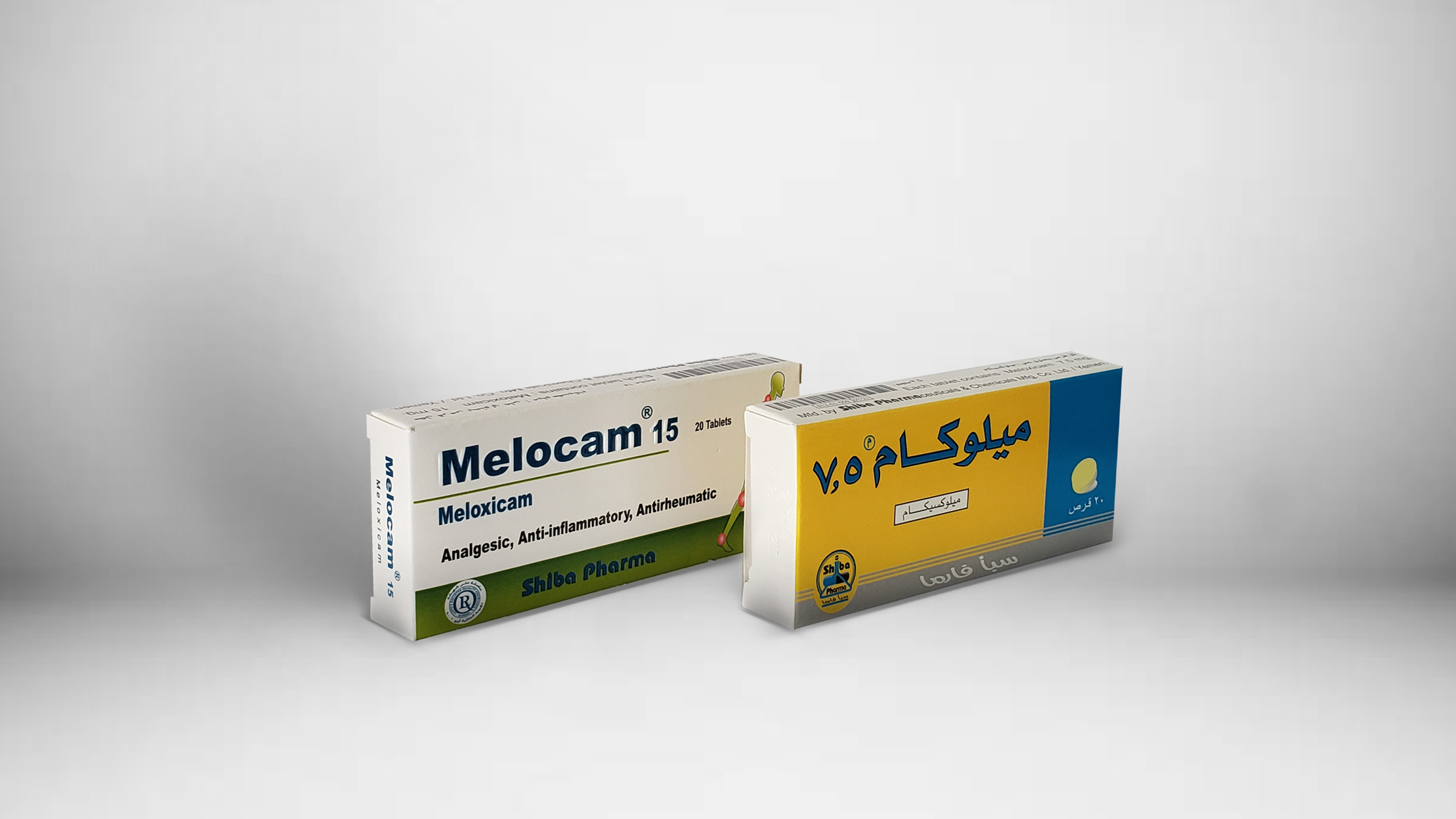
Melocam
📌 COMPOSITION
Each tablet contains: Meloxicam B.P. 7.5 mg or 15 mg.
📌 DESCRIPTION
Melocam (Meloxicam) is a non‑steroidal anti‑inflammatory drug with analgesic and antipyretic effects. It acts by selectively inhibiting prostaglandin biosynthesis at the site of inflammation more than in the gastric mucosa or the kidneys. This results in a superior therapeutic margin and a lower incidence of gastrointestinal adverse effects, including perforations and ulcers or bleeds, over the standard doses of other NSAIDs. Meloxicam is well absorbed from the gastrointestinal tract, and peak plasma concentration is reached within 5-6 hours. It is 99% bound to plasma proteins and penetrates into synovial fluid. Meloxicam is excreted as metabolites in urine and faeces, and has a half‑life ranging from 13-25 hours.
📌 INDICATIONS
- Symptomatic treatment of rheumatoid arthritis.
- Symptomatic treatment of painful osteoarthritis (arthrosis, degenerative joint disease).
📌 DOSAGE & ADMINISTRATION
Tablets should be administered with water or other fluids with food.
Adults and adolescents 16 years and above:
- Rheumatoid arthritis: 15 mg once daily. The dose may be reduced to 7.5 mg once daily.
- Osteoarthritis: 7.5 mg once daily. Increased if necessary to a maximum of 15 mg once daily.
- Elderly or patients at increased risk of adverse effects: Initially 7.5 mg once daily.
📌 RESTRICTIONS ON USE
Contraindications
- Patients with hypersensitivity to aspirin or other non‑steroidal anti‑inflammatory drugs.
- Patients with a history of ulcer, bleeding or perforation in the gastrointestinal tract, or patients with severe hepatic, renal or cardiac failure.
- Children under 16 years of age.
Precautions
- Caution should be exercised in patients at risk of myocardial infarction, or in the presence of other factors (such as hypertension, hyperlipidaemia, diabetes mellitus, smoking). The lowest effective dose should be given for the shortest possible period.
- Skin rash (Stevens‑Johnson syndrome) has been reported with meloxicam use. It initially appears as red spots on the trunk, and other symptoms include ulcers in the mouth, throat and nose. If these symptoms appear, meloxicam should be discontinued.
Use in Pregnancy and Lactation
Meloxicam should not be used in the last trimester of pregnancy. It is not recommended during the first and second trimesters unless clearly necessary, at the lowest effective dose and for the shortest possible period. Meloxicam is not recommended for nursing mothers.
Effects on the capacity to drive vehicles or use machines
Caution should be taken after taking meloxicam, as it may cause visual disturbances, dizziness and drowsiness.
📌 DRUG INTERACTIONS
- Concomitant administration with other NSAIDs increases the risk of GI bleeding and ulceration.
- Concomitant administration with oral anticoagulants increases the risk of bleeding.
- Concomitant administration with lithium increases lithium plasma levels.
- Concomitant administration with methotrexate may increase the haematological toxicity of methotrexate.
- Meloxicam reduces the effects of antihypertensive drugs.
- Cholestyramine leads to faster elimination of meloxicam.
- Nephrotoxicity of cyclosporine may be enhanced by meloxicam.
- Patients who will receive diuretics and meloxicam should be monitored for renal function before starting treatment.
📌 ADVERSE EFFECTS
Melocam is generally well tolerated. Common adverse effects include gastrointestinal disturbances such as nausea, vomiting, diarrhoea, dyspepsia, abdominal pain and flatulence. Rare effects such as ulcer, jaundice, urticaria, encephalopathy and transient disturbances in liver function.
📌 OVERDOSAGE
There is insufficient information about overdosage. In case of suspected overdose, symptomatic and supportive treatment should be given.
📌 STORAGE INSTRUCTIONS
Store below 30°C in a dry place.
📌 PHARMACEUTICAL FORMS
- Melocam 7.5 and 15: Packs of 20 tablets.